

Overbite vs. Underbite: What’s the Difference and How Is It Treated?
October 21, 2026

Overbite vs. Underbite: What’s the Difference and How Is It Treated?
“Does my child have an overbite?” is one of the most common questions parents ask during an orthodontic consultation. Adult patients also ask this question when they notice that their bite does not look or feel quite right and want to know whether an orthodontic problem is present.
An important distinction is that an overbite is not automatically a problem. Overbite refers to the vertical overlap of the upper front teeth over the lower front teeth. A small amount of overlap is normal and healthy.
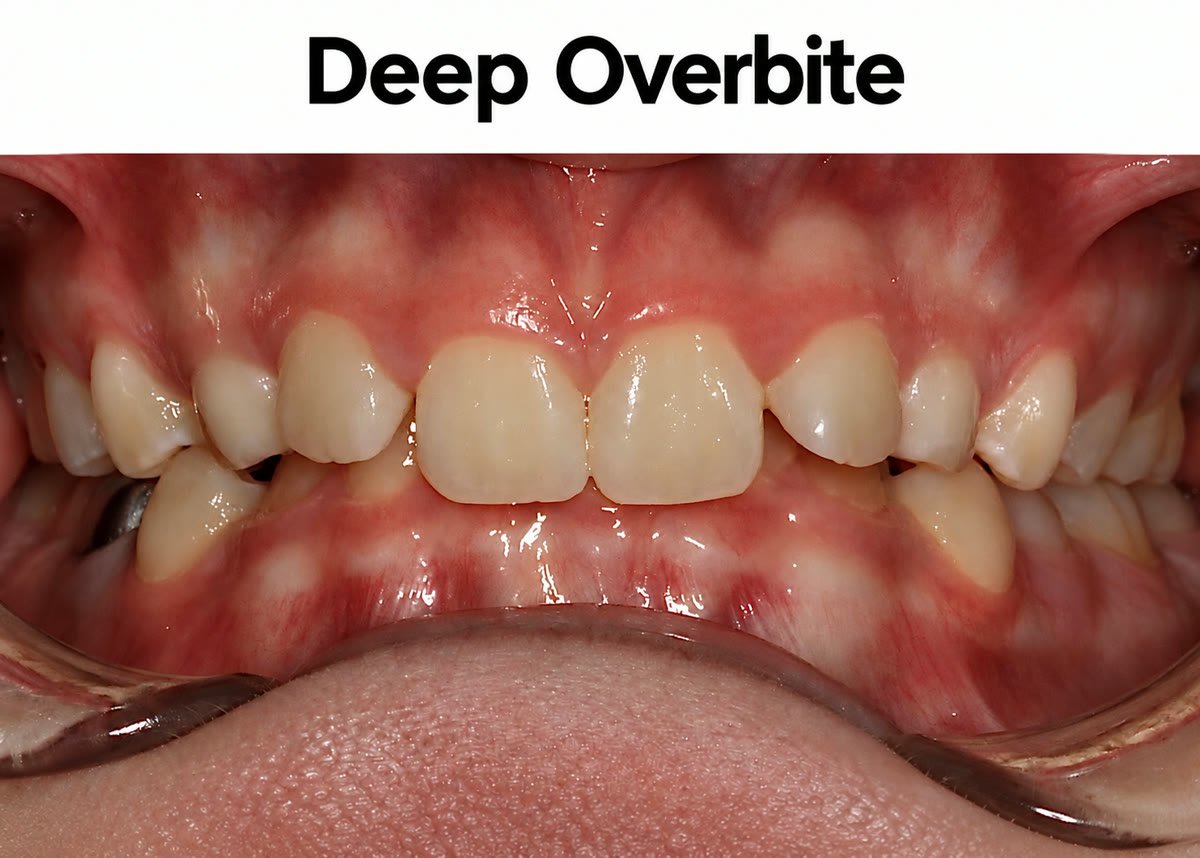
When that overlap becomes excessive, it is called a deep overbite, or deep bite.
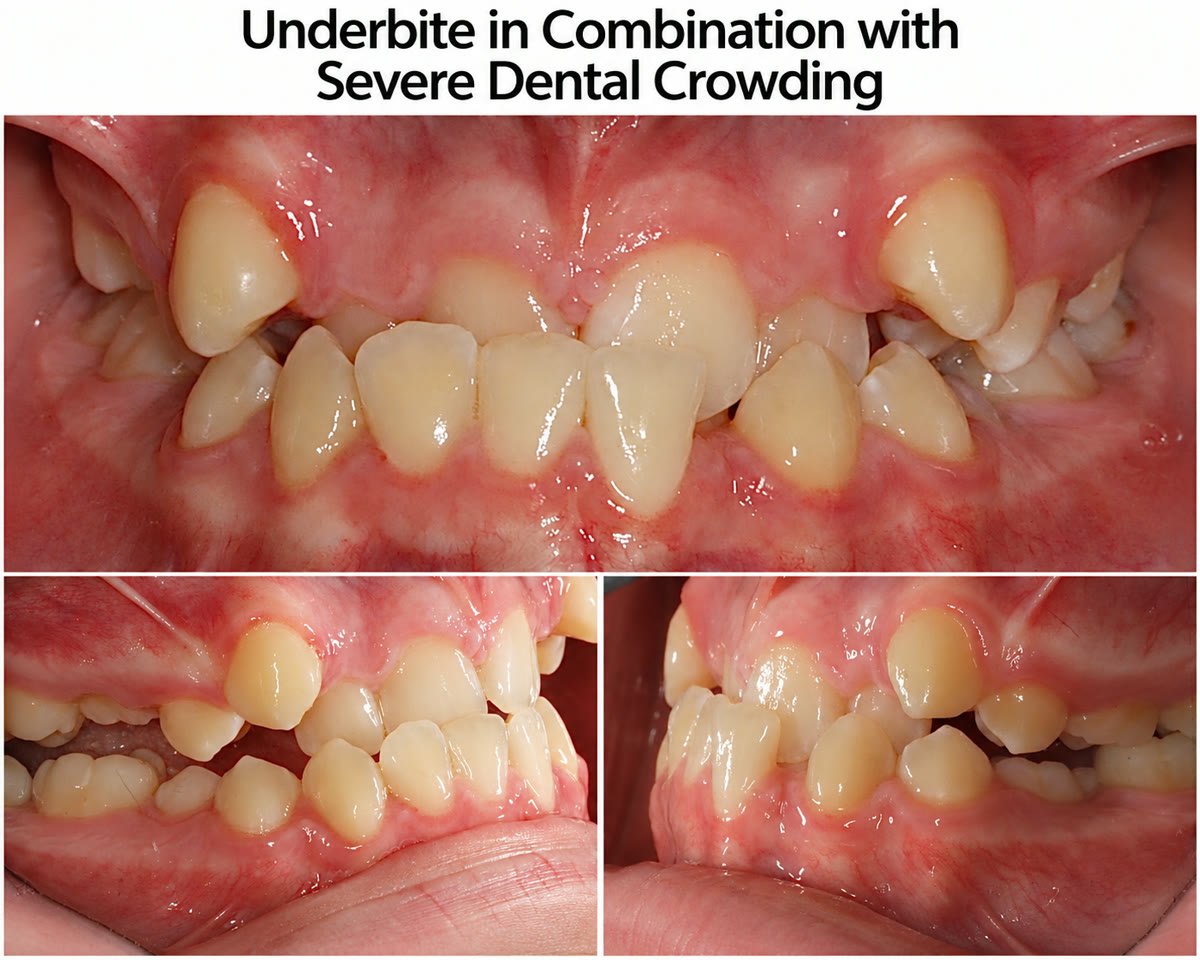
An underbite is different. When the posterior teeth are together, the lower front teeth are positioned in front of the upper front teeth.
Treatment depends on the cause of the bite problem, its severity, the patient’s age, growth, tooth position, and jaw relationship.
Key Takeaways
- A small amount of overbite is normal and healthy.
- A deep overbite means the upper front teeth excessively overlap the lower front teeth.
- A small amount of overjet is also normal. In a healthy bite, the upper front teeth should sit slightly in front of the lower front teeth.
- An underbite means the lower front teeth are positioned in front of the upper front teeth when the back teeth are together.
- Overbite and overjet describe different dimensions of the bite: overbite is vertical; overjet is horizontal.
- A patient may have a bite problem involving overbite, overjet, or both.
- Bite problems may be dental, skeletal, growth-related, or a combination.
- The American Association of Orthodontists recommends a first orthodontic evaluation no later than age 7.
- Children, teenagers, and adults can all benefit from orthodontic treatment when treatment is indicated.
What Is an Overbite?
An overbite is the vertical overlap of the upper front teeth over the lower front teeth.
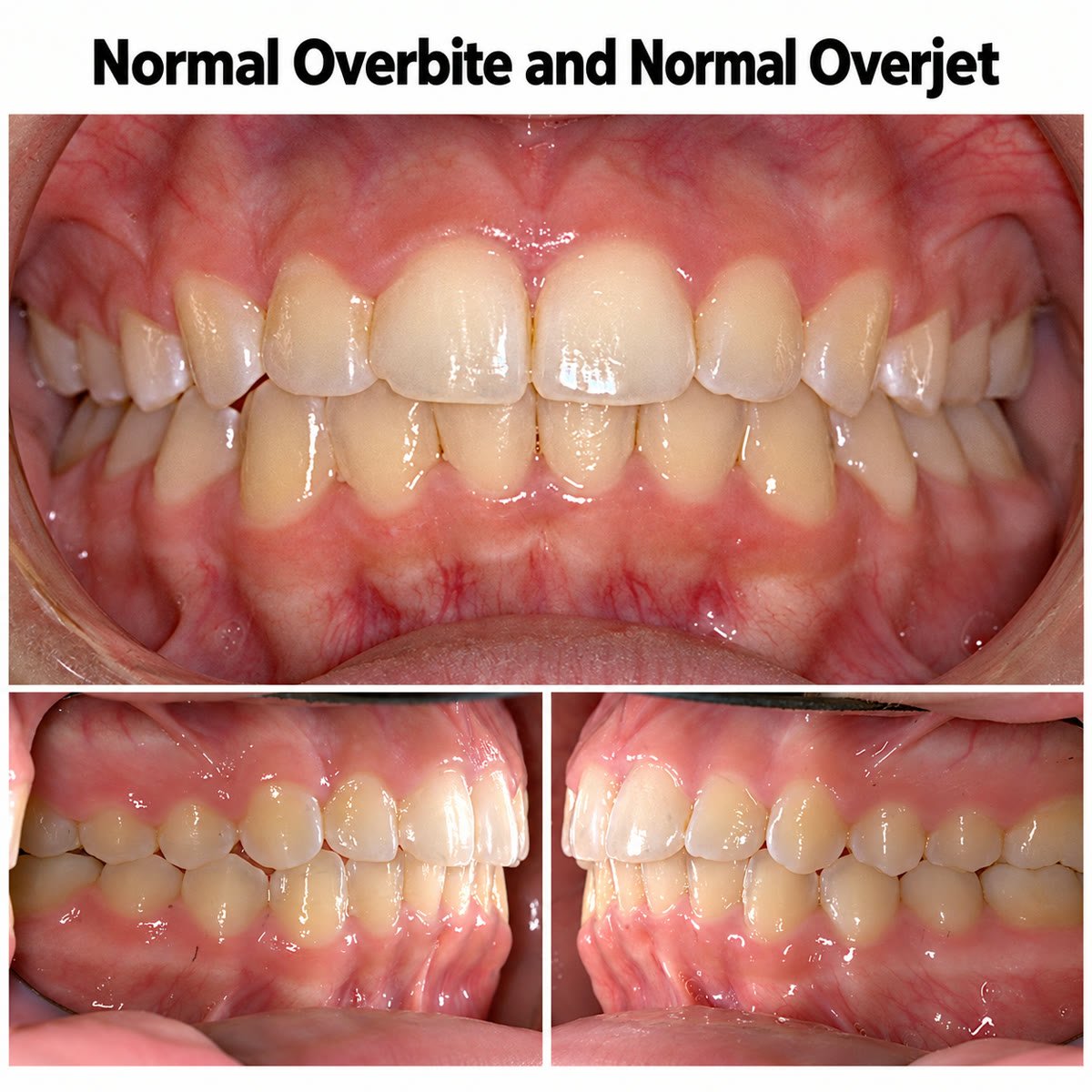
A small amount of vertical overlap—approximately 10–20%—is considered normal and is part of a healthy, functional bite.
Simply having an overbite does not mean that orthodontic treatment is needed.
What Is a Deep Overbite?
A deep overbite, or deep bite, occurs when the upper front teeth cover an excessive portion of the lower front teeth.
Depending on the severity, a deep bite may contribute to:
- Premature wear of the front teeth
- Chipping or flattening of the biting edges
- Excessive contact between the upper and lower front teeth
- Trauma to the gingival tissue behind the upper front teeth
- Unfavorable distribution of biting forces
Whether treatment is recommended depends on the severity of the bite and how it affects the teeth, supporting tissues, and function.
What Is Overjet?
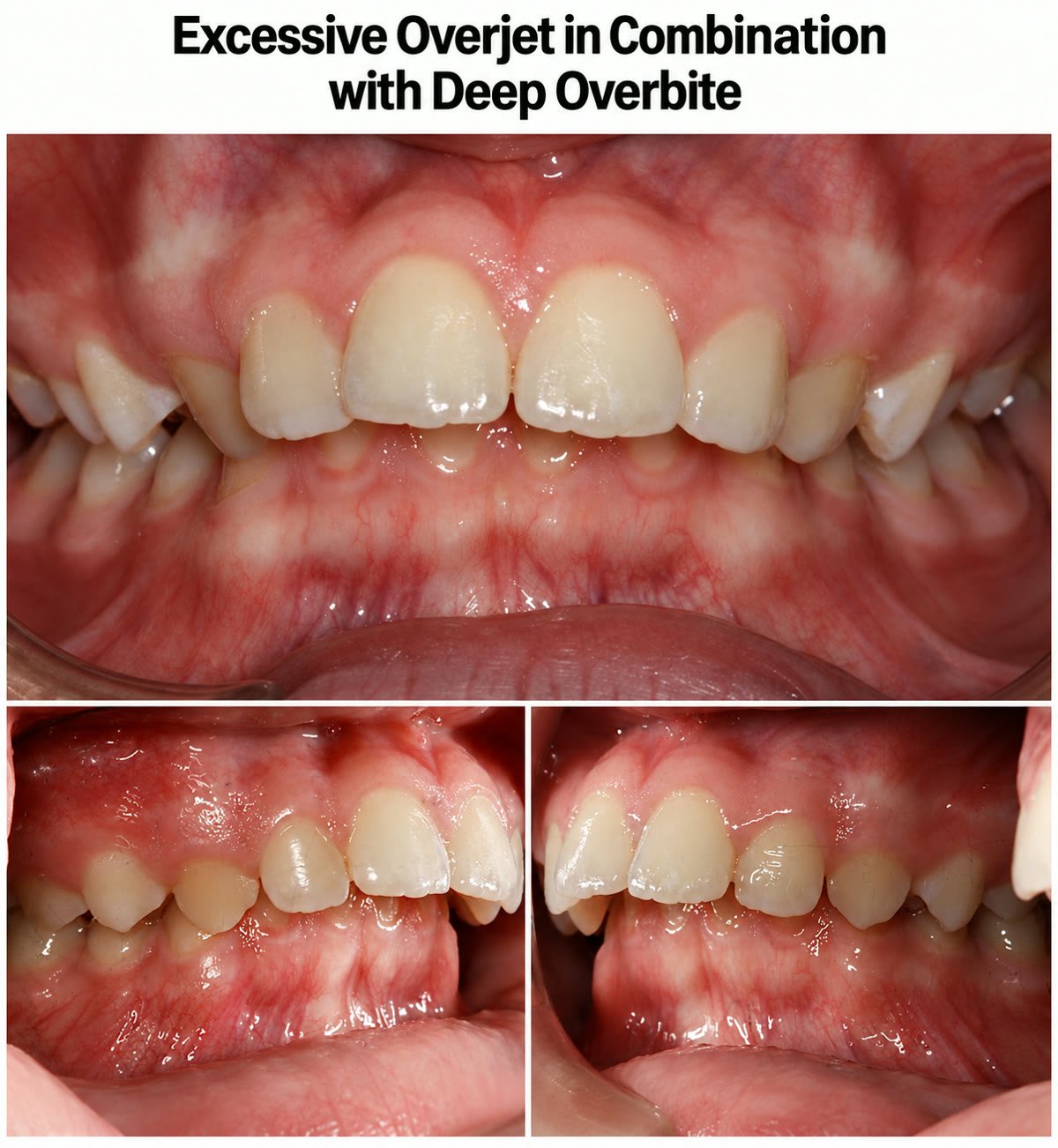
Overjet is the horizontal distance between the upper and lower front teeth.
Some overjet is normal. In a healthy bite, the upper front teeth sit slightly in front of the lower front teeth, with approximately 1–3 mm of horizontal overlap.
A well-balanced bite therefore has both a small vertical overlap, or overbite, and a small horizontal overlap, or overjet.
Overjet becomes an orthodontic concern when it is excessive, reduced, reversed, or otherwise unfavorable for the patient’s bite and function. A patient may have an abnormal overjet, a deep overbite, or a combination of both.
What Is an Underbite?
An underbite occurs when the posterior teeth are together and the lower front teeth are positioned in front of the upper front teeth.
Normally, the upper front teeth sit slightly in front of the lower front teeth. With an underbite, this relationship is reversed.
An underbite may be caused by:
- An upper jaw that is positioned too far back
- A lower jaw that is positioned too far forward
- Upper front teeth that are tipped backward
- Lower front teeth that are tipped forward
- A combination of dental and skeletal factors
In some patients, an underbite may also be associated with a more prominent lower jaw appearance.
Normal Overbite vs. Deep Overbite vs. Underbite
- Normal overbite: a small amount of vertical overlap of the upper and lower front teeth
- Deep overbite: excessive vertical overlap
- Underbite: lower front teeth positioned in front of the upper front teeth when the back teeth are together
The images below illustrate the basic differences:
Class I, Class II, and Class III Bite Relationships
Orthodontists often use Class I, Class II, and Class III to describe how the upper and lower teeth and jaws fit together.
- Class I: The upper and lower teeth fit together in a generally balanced relationship. A patient may still have crowding, spacing, rotations, a deep bite, or a crossbite.
- Class II: The lower teeth and/or lower jaw sit farther back in relation to the upper teeth and jaw. Increased overjet is common with this type of bite.
- Class III: The lower teeth and/or lower jaw sit farther forward in relation to the upper teeth and jaw. An underbite is common with this type of bite.
These classifications are only one part of the orthodontic diagnosis. Dr. Parsons also evaluates tooth position, jaw growth, facial balance, and function.
How Common Are Overbites and Underbites?
Bite problems are common. Data from the Third National Health and Nutrition Examination Survey (NHANES III) found that about 20% of the U.S. population had deviations from an ideal bite relationship, while approximately 2% had discrepancies severe enough to approach the limits of orthodontic correction.
Crowding and irregular tooth alignment were even more common. This is one reason orthodontic patients frequently have more than one concern at the same time, such as crowding together with increased overjet, a deep overbite, or another bite discrepancy.
What Causes Bite Problems?
Orthodontic bite problems may result from the position of the teeth, the relationship of the jaws, oral habits, or a combination of factors.
Dental Causes
Dental causes may include:
- Front teeth tipped too far forward or backward
- Excessive eruption of certain teeth
- Crowding
- Spacing
- Early loss of baby teeth
- Missing permanent teeth
- Differences between tooth size and available arch space
Skeletal Causes
Skeletal bite problems involve the size or position of the upper and lower jaws.
One jaw may be:
- Larger or smaller than the other
- Positioned too far forward
- Positioned too far back
- Growing differently relative to the opposing jaw
Skeletal bite patterns often have a genetic component.
Habits
Certain oral habits may influence the development of the bite, particularly when they continue as permanent teeth erupt.
These may include:
- Thumb or finger sucking
- Prolonged pacifier use
- Tongue thrusting
- Lip sucking
- Lower lip trapping behind the upper front teeth
When a habit is contributing to the bite problem, addressing it may be part of treatment.
What Signs Should Parents Watch For?
Signs of an Overbite or Overjet
- Upper front teeth that project noticeably forward
- Lower front teeth that are barely visible when the child bites down
- Lower front teeth that are hidden when your child bites down
- Lips do not close comfortably over the teeth
- Lower teeth biting into the roof of the mouth behind the upper teeth
Signs of an Underbite
- Lower front teeth that close in front of the upper teeth
- A lower jaw that looks prominent in profile
- Front teeth that meet edge to edge
Other Signs Worth Evaluating
- Difficulty biting into foods such as sandwiches or apples
- Crowded, spaced, or blocked-out teeth
- Early or late loss of baby teeth
- A jaw that shifts when closing
- Persistent thumb or finger sucking
These findings do not always mean that treatment is needed, but they are good reasons to have an orthodontic evaluation.
When Should a Child See an Orthodontist?
The American Association of Orthodontists recommends that children have their first orthodontic evaluation no later than age 7.
At this age, an orthodontist can evaluate:
- Tooth eruption
- Developing bite relationships
- Jaw growth
- Crowding and available space
- Crossbites
- Underbites
- Deep bites
- Excessive overjet
- Oral habits
A consultation at age 7 does not mean treatment should automatically begin at that age.
For many children, the best recommendation is simply to monitor growth and dental development until treatment is more appropriate.
Why Timing Matters in Growing Children
Some orthodontic problems are easier to address while a child is still growing.
Early treatment may be considered for patients with:
- Significant underbites
- Crossbites
- Severe skeletal discrepancies
- Very prominent upper front teeth
- Traumatic deep bites
- Significant space or eruption problems
- Harmful oral habits
The decision to treat early should be based on a specific clinical reason, not age alone.
What Research Shows About Early Treatment
Research on children with prominent upper front teeth has shown that earlier treatment may reduce the risk of dental trauma.
Prominent upper front teeth are generally associated with increased overjet, meaning the upper front teeth sit farther forward than normal relative to the lower front teeth.
For children with an underbite, early orthodontic evaluation and treatment may be especially important. Underbites are often recommended to be addressed early, sometimes as early as age 7, while the child is still growing and the jaw relationship may be more responsive to treatment.
Because facial growth continues through adolescence, children treated for an underbite should continue to be monitored as growth progresses.
How Is a Deep Overbite Treated?
When the overbite is deep and is contributing to unfavorable tooth contact, wear, trauma to the gingival tissue, or other bite-related concerns, treatment may include:
- Braces
- Clear aligners
- Bite-opening orthodontic mechanics
- Elastics
- Functional appliances in growing patients
- Expansion when indicated
- Habit correction when relevant
- Invisalign First in appropriately selected younger patients
The treatment approach depends on the cause of the deep overbite, the patient’s age and growth, and the overall relationship of the teeth and jaws.
How Is an Underbite Treated?
Treatment depends on whether the underbite is primarily dental or skeletal.
In Growing Children
Treatment may include:
- Expansion
- Braces
- Clear aligners
- Appliances designed to improve the relationship of the upper and lower jaws
- Other growth-related orthodontic mechanics
Because growth can be used to help improve the developing jaw relationship, underbites are often addressed early in young growing patients.
In Teenagers and Adults
If the underbite is primarily caused by tooth position, braces or clear aligners may be able to correct it.
When a significant skeletal discrepancy is present, orthodontic treatment alone may have limitations. In adults with a severe skeletal Class III relationship, orthodontic treatment combined with jaw surgery may provide the most predictable correction.
Can Invisalign Treat a Deep Overbite or Underbite?
Invisalign can treat many bite problems, including:
- Deep overbite
- Increased overjet
- Dental underbite
- Crowding
- Spacing
Whether clear aligners are appropriate depends on the type of tooth movement required, the skeletal relationship, age, growth, and treatment goals.
Appliance selection should be based on what will most predictably achieve a healthy and stable result.
Why Treat a Bite Problem?
Not every variation in the bite requires orthodontic treatment.
Treatment may be recommended when a bite problem contributes to:
- Premature tooth wear
- Chipping
- Trauma to the gingival tissue
- Difficulty biting or chewing
- Increased risk of injury to protrusive front teeth
- Unfavorable biting forces
- Crowding that makes oral hygiene more difficult
- Functional concerns
- Esthetic concerns
The goal of orthodontic treatment is to improve the relationship between the teeth, bite, and supporting structures while creating a stable and functional result.
What to Expect at Your Orthodontic Consultation
Your first visit at Parsons Orthodontics is complimentary.
It includes:
- Photographs
- A panoramic X-ray
- A comprehensive orthodontic examination by Dr. Parsons
- Evaluation of the upper and lower teeth and jaws
- Assessment of tooth eruption and available space
- Evaluation of the bite
- Discussion of oral habits when relevant
- A recommendation regarding whether treatment is needed now, later, or not at all
- Review of treatment options, fees, insurance benefits, and payment options
For children, the recommendation may simply be to monitor growth and dental development.
If observation is recommended rather than starting treatment right away, Dr. Parsons will explain the reasons for that recommendation and when the most appropriate time will be to reevaluate or begin treatment.
Cost and Payment Options
Orthodontic fees depend on the complexity of treatment, the appliances used, and the anticipated length of treatment.
Parsons Orthodontics accepts most insurance plans with orthodontic benefits and offers:
- In-house interest-free financing
- HSA and FSA payment options
- CareCredit
Our team will review your estimated insurance benefits and payment options before you make a treatment decision.
Retention and Long-Term Follow-Up
Retention is an important part of maintaining orthodontic results.
Teeth remain in a dynamic environment throughout life and are continuously influenced by biting, chewing, clenching, tongue pressure, and the surrounding lips and cheeks.
For this reason, long-term nighttime retainer wear is generally recommended after the initial retention period.
Retainers can wear down, stretch, crack, or lose their proper fit over time and should be replaced when needed.
Children and teenagers who have been treated for significant jaw discrepancies may also require continued monitoring as growth progresses.
Why Families Choose Parsons Orthodontics
Parsons Orthodontics is a private, boutique-style orthodontic practice in Lake Worth.
Dr. Tetyana Parsons is a board-certified orthodontist who personally examines each patient, develops each individualized treatment plan, and monitors treatment progress throughout care.
We treat children, teenagers, and adults and offer:
- Early orthodontic treatment
- Metal braces
- Ceramic braces
- Self-ligating braces
- Invisalign
- Invisalign First
- Growth-related orthodontic appliances when appropriate
Because we offer multiple treatment approaches, recommendations are based on each patient’s diagnosis, bite, growth, dental development, and treatment goals rather than on a single appliance system.
Families visit Parsons Orthodontics from Lake Worth, Wellington, Greenacres, Boynton Beach, Royal Palm Beach, West Palm Beach, Delray Beach, and throughout Palm Beach County.
Frequently Asked Questions
Is an overbite normal?
Yes. A small amount of vertical overlap of the upper front teeth over the lower front teeth is normal and healthy.
What is a deep overbite?
A deep overbite occurs when the upper front teeth excessively cover the lower front teeth.
Is overjet normal?
Yes. A small amount of overjet is normal. In a healthy bite, the upper front teeth are positioned slightly in front of the lower front teeth, typically by approximately 1–3 mm.
What is the difference between overbite and overjet?
Overbite is the vertical overlap between the front teeth. Overjet is the horizontal distance between them. A bite problem may involve one or both relationships.
Are “buck teeth” the same as an overbite?
Not exactly. The term “buck teeth” usually refers to increased overjet, where the upper front teeth project farther forward than normal relative to the lower front teeth.
What is an underbite?
An underbite occurs when the posterior teeth are together and the lower front teeth are positioned in front of the upper front teeth.
Will my child grow out of an overbite or underbite?
Not necessarily. Some bite relationships change as a child grows, but skeletal bite problems do not reliably correct on their own. An orthodontic evaluation can determine whether the best approach is to monitor growth or begin treatment.
Can braces correct a deep overbite?
Yes, in many cases. The exact mechanics depend on the cause and severity of the bite.
Can braces correct an underbite?
Often, particularly when the underbite is primarily dental. Significant skeletal underbites may require a different treatment approach.
Can Invisalign correct a deep bite or underbite?
In many patients, yes. The orthodontic examination determines whether clear aligners can predictably accomplish the required tooth movements.
Does an underbite always require surgery?
No. Many underbites can be managed without surgery, especially when treatment begins during growth. Significant skeletal underbites in adults may require a combined orthodontic and surgical approach.
Can adults correct bite problems?
Yes. Many adult bite problems can be treated with braces or clear aligners. Significant skeletal discrepancies may require combined orthodontic and surgical treatment.
Does an overbite get worse with age?
It may. A deep overbite or increased overjet usually does not correct on its own. Tooth movement, wear, and changes in the supporting tissues over time may make the bite problem more noticeable. An orthodontic evaluation can determine whether the bite is stable or changing.
Does correcting an overbite or underbite change your face?
It may, depending on the cause and the type of treatment. Moving the front teeth can change the way the lips rest over the teeth. More noticeable changes to the facial profile may occur when orthodontic treatment guides jaw growth in a child or when jaw surgery is part of an adult treatment plan. Dr. Parsons will explain what changes, if any, can reasonably be expected.
How long does treatment take?
Treatment time varies depending on the severity of the problem, patient age, growth, appliance used, and the complexity of the required tooth movement.
At what age should my child see an orthodontist?
The American Association of Orthodontists recommends a first orthodontic evaluation no later than age 7. An underbite is one of the conditions that may benefit from evaluation and treatment while a child is still growing.
Related Articles
- Crossbite Treatment
- Open Bite: Types, Causes, and Treatment
- Two-Phase Orthodontic Treatment in Lake Worth: A Parent's Guide
- Functional Appliances in Orthodontics
- Invisalign First: Clear Aligners for Kids Ages 6 to 10
Ready to Schedule Your Complimentary Consultation?
If you have questions about your child’s bite—or if you are an adult who has noticed that your own bite does not look or feel quite right—an orthodontic evaluation can provide clear answers.
Your first visit at Parsons Orthodontics is complimentary and includes photographs, a panoramic X-ray, and a comprehensive examination with board-certified orthodontist Dr. Tetyana Parsons.
We will explain what type of bite relationship is present, whether treatment is recommended, the best timing, and which treatment options are appropriate for your individual case.
There is no obligation to begin treatment.
Call Parsons Orthodontics at 561-429-5414 or request an appointment online.
Let us design your beautiful smile!

